
Carpal Tunnel Relief: 5 Fixes You Can Do at Your Office Desk

Carpal tunnel relief at the office rarely needs a dramatic fix. If your thumb, index, and middle fingers tingle, your hand goes numb, you feel shock-like jolts, or your grip feels weak after a long day of typing and mousing, small, consistent changes at your desk ease the carpal tunnel pain in most mild to moderate cases.
Let’s define it first. Carpal tunnel syndrome (CTS) is a common condition that happens when the median nerve gets compressed where it passes through the carpal tunnel, a narrow passageway in the wrist roofed by the transverse carpal ligament. Long stretches of repetitive hand work do not clearly cause it, but they can make the symptoms worse once they start, and a past wrist injury or conditions like arthritis can contribute too.
The evidence points to conservative steps first. According to the American Academy of Family Physicians' 2024 review, "patients with mild to moderate CTS initially may be offered nonsurgical treatments, such as splinting or local corticosteroid injections." Many office workers with mild to moderate symptoms improve with these steps and avoid surgery, though recovery varies and stubborn or severe cases still need medical care. Most of what follows you can start today, between meetings, without leaving your chair. If you want the full background, here is what carpal tunnel syndrome is.
One note before the list, this is general information, not medical advice. If your numbness is constant, your grip is weakening, or symptoms persist after a few weeks, see a clinician.
One This Page
- Reset your wrist to a neutral position
- Switch to an ergonomic input device
- Take regular breaks from typing and mousing
- Do quick nerve glides and wrist stretches
- Wear a wrist splint, especially at night
- When to see a doctor
- How to start today
1. Reset your wrist to a neutral position
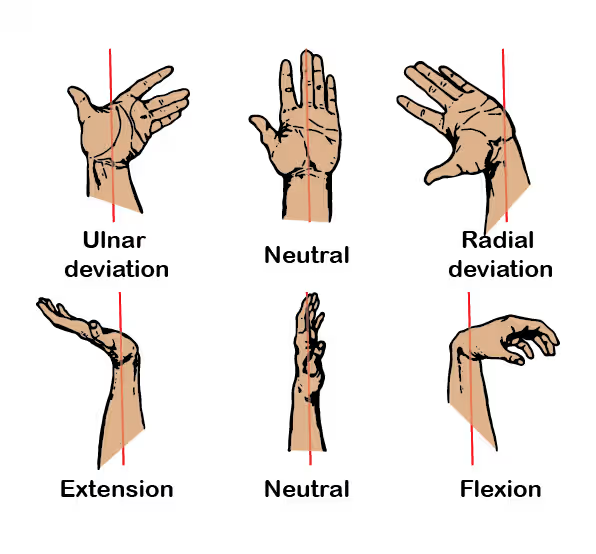
Start with how your wrist sits, because it defines the load on the median nerve every working hour. A wrist that cocks up to reach the keyboard, or bends toward the little finger keeps pressure on the carpal tunnel all day. The goal is to hold your forearm, wrist, and hand in roughly one straight line.
Two changes to your posture make this concrete. First, set your chair and desk so your forearms rest level and your wrists stay straight rather than bending up to the keyboard. Second, watch your grip. If you are clenching the mouse or pounding the keys, ease off, because lighter force means less strain through the wrist and hand.
A gel wrist rest or padded mouse pad can help, but only if you use it right. Rest your palm or the heel of your hand on it, not your wrist, and keep the wrist straight. Resting the wrist itself and angling the hand up is a common mistake that presses on the median nerve and works against you. These ergonomic adjustments are free or cheap, and they pay off because they reduce the repetitive load that makes symptoms worse. For the full workstation walk-through, see our guide to preventing carpal tunnel at the desk.
2. Switch to an ergonomic input device
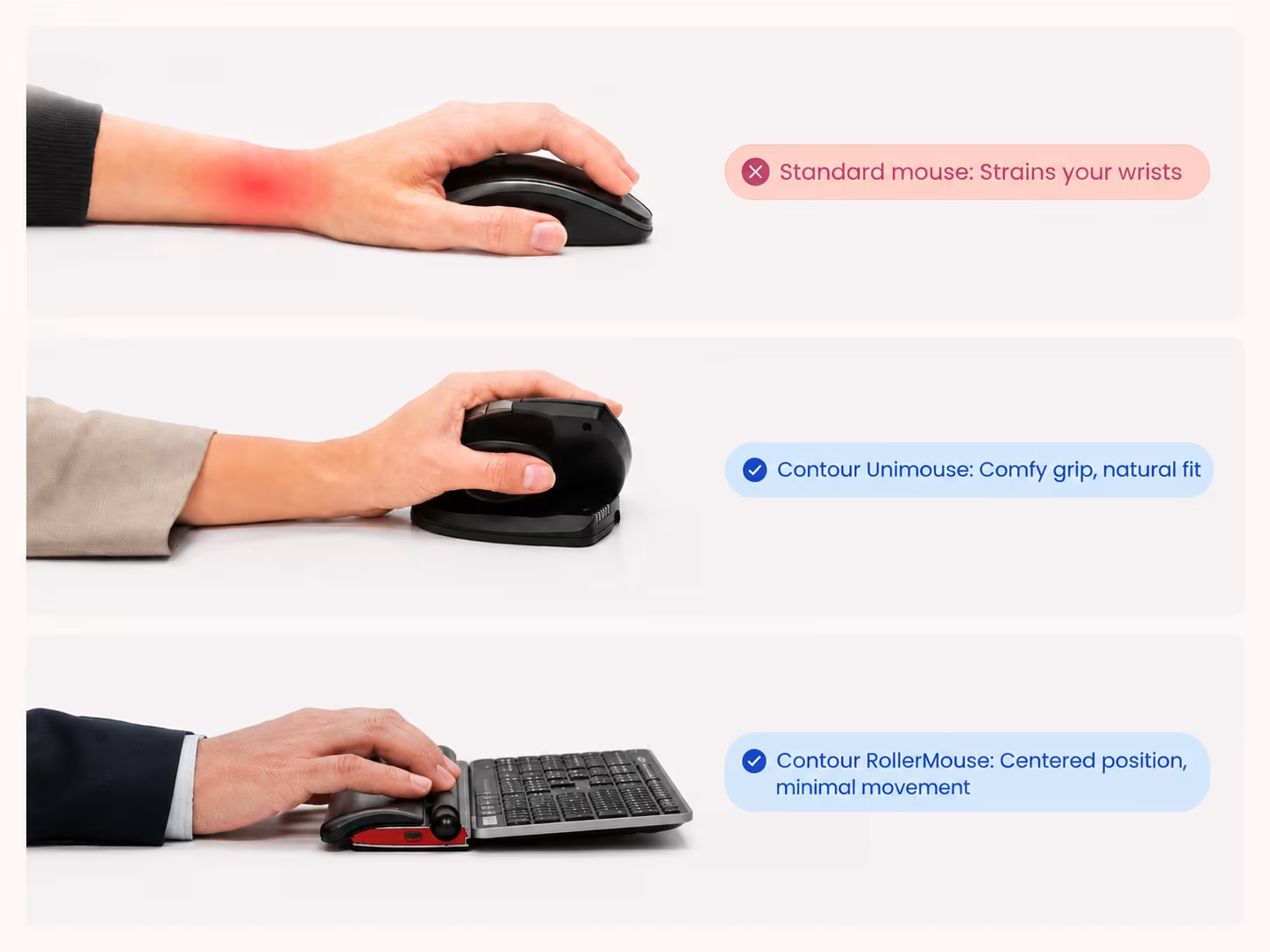
Your mouse and keyboard decide how much your wrist twists and bends, so the devices themselves are a lever for relief. The evidence here is about mechanics, not cures. An ergonomic input device can lower the mechanical load on the wrist and forearm and may ease discomfort for people who already have symptoms. It is not a proven way to prevent or cure carpal tunnel syndrome, so treat it as one layer of your setup.
The principle is to cut forearm twist and sideways wrist bend. A standard mouse forces the forearm into a palm-down twist; a vertical, handheld design holds the hand closer to a handshake angle, which a study in Ergonomics linked to lower wrist pronation and extensor activity, though it noted people need a week or two to adapt. A centered control that sits in front of the keyboard removes the reach to a side mouse; a study in Applied Ergonomics found this kind of device produced the most neutral wrist posture of those tested.
As examples of those two principles, the UniMouse improves posture with an adjustable angle, while the RollerMouse Red keeps both hands centered and straight. Which one fits depends on your symptoms and how you work, for a deeper comparison, see our roundup of the best mouse for carpal tunnel. If you would like to explore more ergonomic device solution, here is a two-minute quiz to land on the right one for you.
3. Take regular breaks from typing and mousing
Sustained, repetitive hand work keeps the same muscles loaded with no recovery, so short, frequent breaks matter more than long ones. Clinicians commonly suggest stepping away from repetitive tasks roughly every 15 minutes to wiggle the fingers, relax the shoulders, and move the wrists. A few seconds is enough.
The point is frequency, not duration. A quick open hand stretch and a slow wrist circle restore blood flow and break the holding pattern your hand falls into during deep focus. Pair the break with standing up now and then, which also eases the neck and shoulders that stiffen during desk work.
On long focused sessions, set a timer so the breaks happen even when the work pulls you in.
4. Do quick nerve glides and wrist stretches
A two-minute routine at your desk keeps the median nerve and tendons moving freely through the carpal tunnel. A systematic review in the Journal of Manipulative and Physiological Therapeutics found the evidence limited: standard conservative care looked like the stronger option for pain relief, while neural gliding "might be a complementary option to accelerate recovery of function". Treat these as a useful add-on, not a standalone cure.
For a simple tendon glide, hold your hand up with the fingers straight, then bend them into a hook, then a fist, then a flat tabletop shape, pausing a few seconds in each. Move slowly and stop short of pain. Two or three slow sets, a couple of times a day, is plenty.
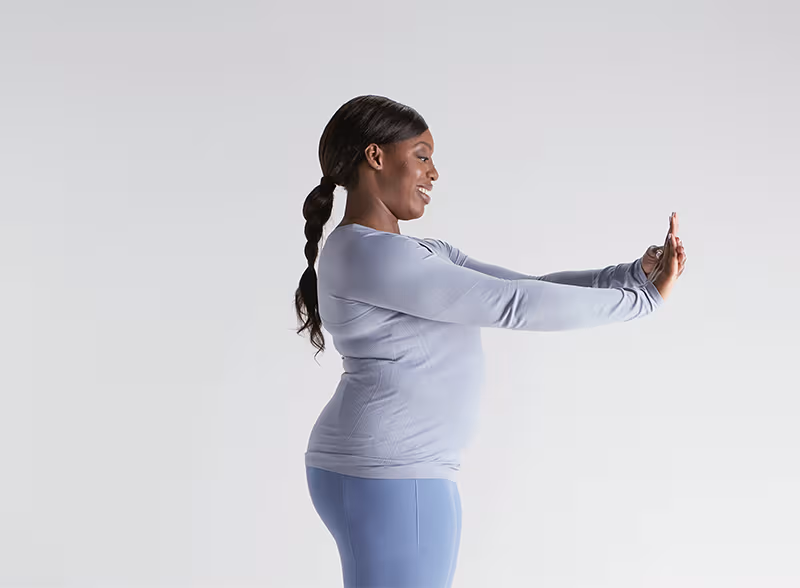
Add a gentle wrist stretch. Straighten one arm in front of you, palm down, then use the other hand to draw the fingers back toward your body, hold about 20 seconds, then point them down and hold again. If a movement causes tingling, ease off.
As symptoms settle, gradual strengthening of the forearm and grip, plus loosening the neck and shoulders, helps many people, because wrist symptoms sometimes trace partly to tension higher up the arm. Build up slowly and stay out of pain. If you are unsure that you are stretching correctly, a physical therapist or hand therapist can coach the glides, guide the strengthening, and check your splint.
5. Wear a wrist splint, especially at night
A neutral wrist splint has the strongest practical evidence of the steps here, and it is the one most guidelines start with. A Cochrane review of splinting found that people were more likely to report overall improvement with a night-time splint than with no treatment. The effect may be modest, but the splint is cheap and carries no real long-term downside.
Two details matter. A wrist brace with a firm, hard insert that holds the wrist straight beats a soft one that pulls it into extension, and night-only wear works as well as wearing it around the clock, because nighttime is when many people bend the wrist and raise pressure on the median nerve. Starting this kind of bracing in the early stages can ease symptoms without surgery.
Keep it to nights, though. Wearing a brace all day, every day can leave the wrist weaker and more reliant on it, so skip the all-day habit unless a clinician advises it. A rigid brace also tends to slow your typing, which is why most people cannot wear one through the workday anyway. You can buy a basic wrist brace over the counter without a prescription.
Skip the drugstore painkiller as your main plan. According to the AAFP review, nonsteroidal anti-inflammatory drugs like ibuprofen and pain relievers like acetaminophen have not shown benefit for carpal tunnel syndrome specifically.
Quick comfort for a sore wrist
On days when your wrist is sore and swollen, cold therapy can take the edge off. A cold pack or short ice bath for about 10 to 15 minutes can reduce swelling and inflammation and ease the pain, with a thin layer between the ice and your skin. This is comfort care, not a fix, so do not expect it to change the course of carpal tunnel syndrome. Some people prefer heat for stiffness instead. Keeping your hands warm throughout the day helps too, since cold stiffens the joints, and some people wear fingerless gloves at a chilly desk.
When to see a doctor
See a clinician if numbness becomes constant, your grip weakens, you keep dropping things, or these steps are ineffective after a few weeks. Left compressed for a long time, the median nerve can suffer permanent nerve damage and lasting weakness at the base of the thumb, so it is worth getting evaluated early, especially if other health conditions like diabetes or thyroid problems are involved.
Diagnosis usually starts with a physical exam and your symptom history, sometimes confirmed with nerve conduction studies that measure how well the median nerve is working. Similar tingling and numbness can also come from the neck or other repetitive strain conditions, which is one more reason to get a clear diagnosis instead of guessing. If conservative treatments fail or the case is severe, an orthopedic surgeon may discuss carpal tunnel surgery, called carpal tunnel release. The procedure cuts the transverse carpal ligament to make more space and reduce pressure on the median nerve, and it usually takes under two hours. Open surgery uses a small incision in the palm, while endoscopic surgery works through one or two small openings with a tiny camera. Most people get lasting relief, though full recovery time varies.
How to start today
You can put four of these five into play before lunch.
- Square up your chair and desk so your forearms are level and your wrists stay straight. Look at whether your mouse and keyboard fit your hand.
- Loosen your grip on the mouse, and add a wrist rest if you have one.
- Set a 15-minute timer to prompt a few seconds of finger and wrist movement.
- Run one set of tendon glides and a wrist stretch now, then again, this afternoon.
- Tonight, wear a neutral splint
Pain that starts at the wrist sometimes spreads. If yours has reached the thumb or hand base, our guide to thumb joint pain at the desk covers what that can mean. Pick two changes you can make today, give them a couple of weeks, and treat stalled progress as a reason to get a professional opinion.
Frequently asked questions
How do I get relief from carpal tunnel at work?
Keep your wrist in a neutral, straight position, loosen your grip, and take short breaks from typing and mousing every 15 minutes or so. Add quick nerve glides and wrist stretches and consider an ergonomic mouse or keyboard. Wear a neutral splint at night for nighttime symptoms.
What is the best relief for carpal tunnel?
For mild to moderate cases, a neutral wrist splint has the best balance of evidence, cost, and safety as a first step. Daytime desk habits like neutral posture, lighter grip, regular breaks, and an ergonomic setup support it. A corticosteroid injection gives stronger short-term relief but fades over months.
How do you get instant relief from carpal tunnel?
There is no true instant fix, but shaking out the hand, straightening the wrist, and pausing the repetitive task can ease a sudden bout of tingling. For lasting relief, you need the daily habits above. Constant numbness or weakness means it is time to see a clinician.
How can I get relief from carpal tunnel at night?
Wear a splint that holds your wrist straight while you sleep, since a bent wrist raises pressure on the median nerve for hours. Avoid sleeping on your hands or with your arm folded tightly. Night-only splinting works as well as all-day wear.
How is carpal tunnel syndrome diagnosed?
A clinician usually diagnoses it with a physical exam and your symptom history, checking for numbness, tingling, and grip weakness. Nerve conduction studies can confirm median nerve compression and show how advanced it is. Getting evaluated early gives conservative treatments the best chance to work.
Can you recover from carpal tunnel without surgery?
Often, yes. Many mild to moderate cases improve, and some resolve, with conservative care like night splinting, neutral wrist habits, regular breaks, gentle nerve glides, and an ergonomic setup. Recovery varies and can take weeks to months. Severe symptoms, or ones that keep worsening, may still need a doctor or surgery.
How long does it take to get relief from carpal tunnel?
Simple steps like a night splint and a neutral wrist often ease nighttime symptoms within a week or two. Fuller recovery is slower and varies, sometimes taking a few months of consistent habits. If you see no change after a few weeks, or symptoms get worse, see a clinician.
Do wrist rests help with carpal tunnel?
A wrist rest helps only if you use it correctly. Rest your palm or the heel of your hand on it, not your wrist, and keep the wrist straight. Resting the wrist itself and angling the hand up can press on the median nerve. An ergonomic mouse or keyboard that keeps the wrist neutral usually does more.

Not Sure Where to Start?
Answer a few quick questions, and we’ll match you with a device that works perfectly for your needs.

