
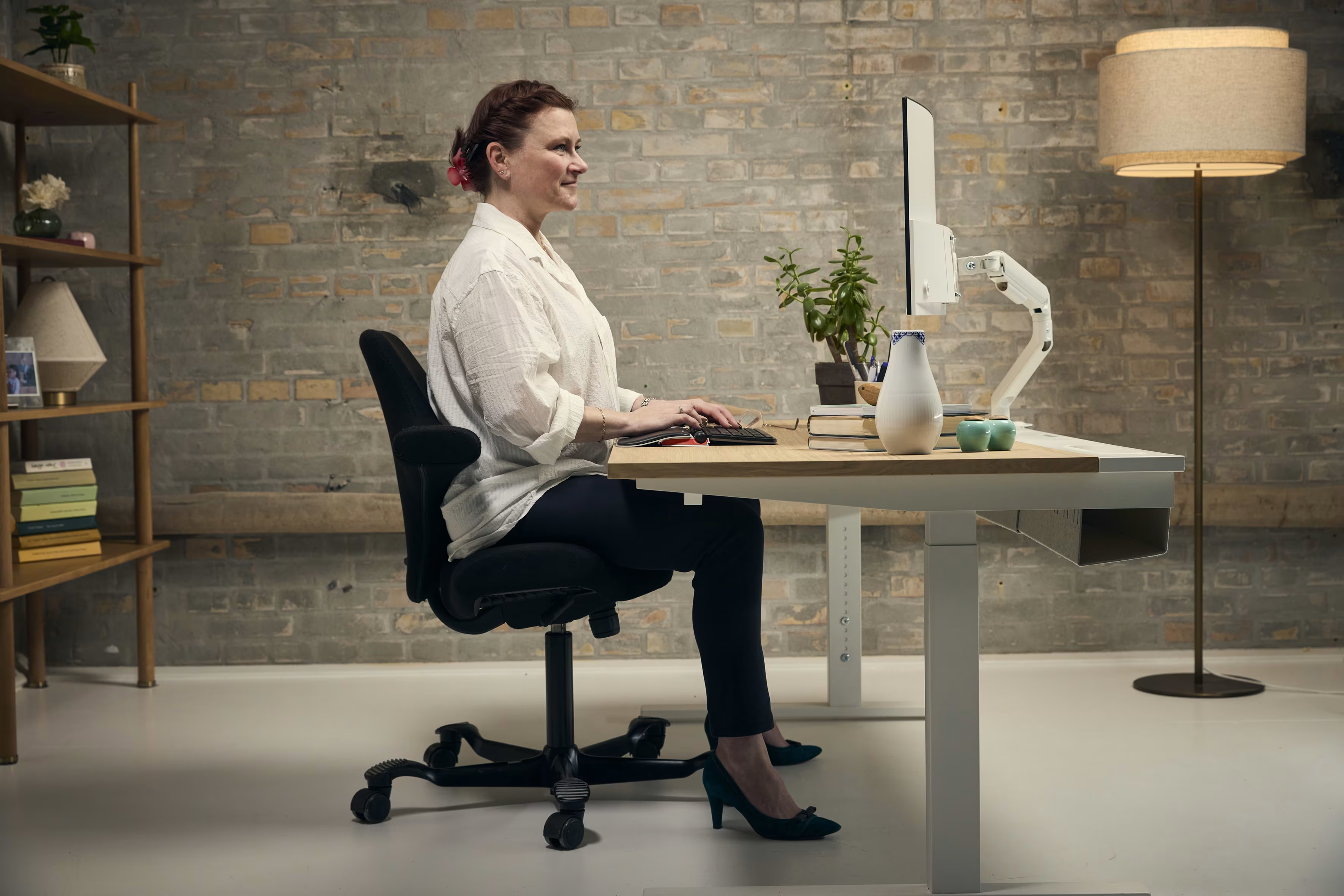
Walk into a modern office and a lot of it feels intuitive.
The chair supports you through a full day of work. Tools are within easy reach. Lighting is designed to reduce strain. Spaces are set up for both focus and collaboration.
It’s easy to take these things for granted. But none of them happened by accident.
They exist because, over time, designers and researchers began asking different kinds of questions. Instead of forcing people to adapt to rigid systems, what if work was designed around how people actually move, think, and operate?
Many of the people who pushed that thinking forward were women. Their work reshaped the modern workplace in ways that still influence how we design today.
When offices were built for control, not comfort
Early offices looked very different from what we know now.
Large rooms were filled with rows of identical desks. Managers could easily monitor employees, but workers had little privacy or control over their environment.
The goal was straightforward. Maximize oversight and output.
Comfort and long-term health were rarely part of the equation. If something didn’t feel right, the expectation was simple. Adjust and keep working.
As office work expanded in the early twentieth century, that mindset started to shift. A new group of thinkers began to question whether efficiency had to come at the expense of people.
Could work be organized in a way that reduces fatigue? Could environments support performance instead of draining it?
Those questions opened the door to a different way of thinking about work.
Lillian Moller Gilbreth: Understanding how people really work
Lillian Moller Gilbreth was one of the first to explore that shift in a meaningful way.
Trained as a psychologist and industrial engineer, she brought a perspective that had largely been missing from early management theory. Instead of focusing only on output, she looked at the human experience behind it.
Working with her husband Frank Gilbreth, she studied how people physically moved while performing everyday tasks.
They didn’t just observe. They documented. By filming workers and analyzing movements frame by frame, they were able to see patterns that were otherwise easy to miss.
What they found was surprisingly simple.
Small changes could make a big difference.
When tools were placed closer to the body, fatigue decreased. When workstations were arranged more thoughtfully, unnecessary movement disappeared. When workflows were simplified, people could focus more easily.
These were not dramatic redesigns. They were small adjustments that added up over time.
Gilbreth’s work became the foundation for what we now call ergonomics. More importantly, it introduced a new way of thinking.
When work supports natural human movement, people perform better and stay healthier.
Florence Knoll: Designing offices around people
A few decades later, Florence Knoll expanded that thinking beyond individual tasks and into entire environments.
As companies grew after World War II, offices became larger and more complex. The challenge was no longer just how people worked at a desk, but how teams functioned within a given space.
Knoll approached this differently than most.
Instead of starting with furniture, she started with observation.
Her team studied how employees moved through offices, how they communicated, and how different types of work required different environments. They mapped workflows and patterns before making design decisions.
Only then did the physical layout take shape.
This approach led to the creation of the Knoll Planning Unit, one of the first teams to combine architecture, research, and interior design into a single process.
The idea was straightforward, but it changed everything.
Design the workplace as a system that supports people.
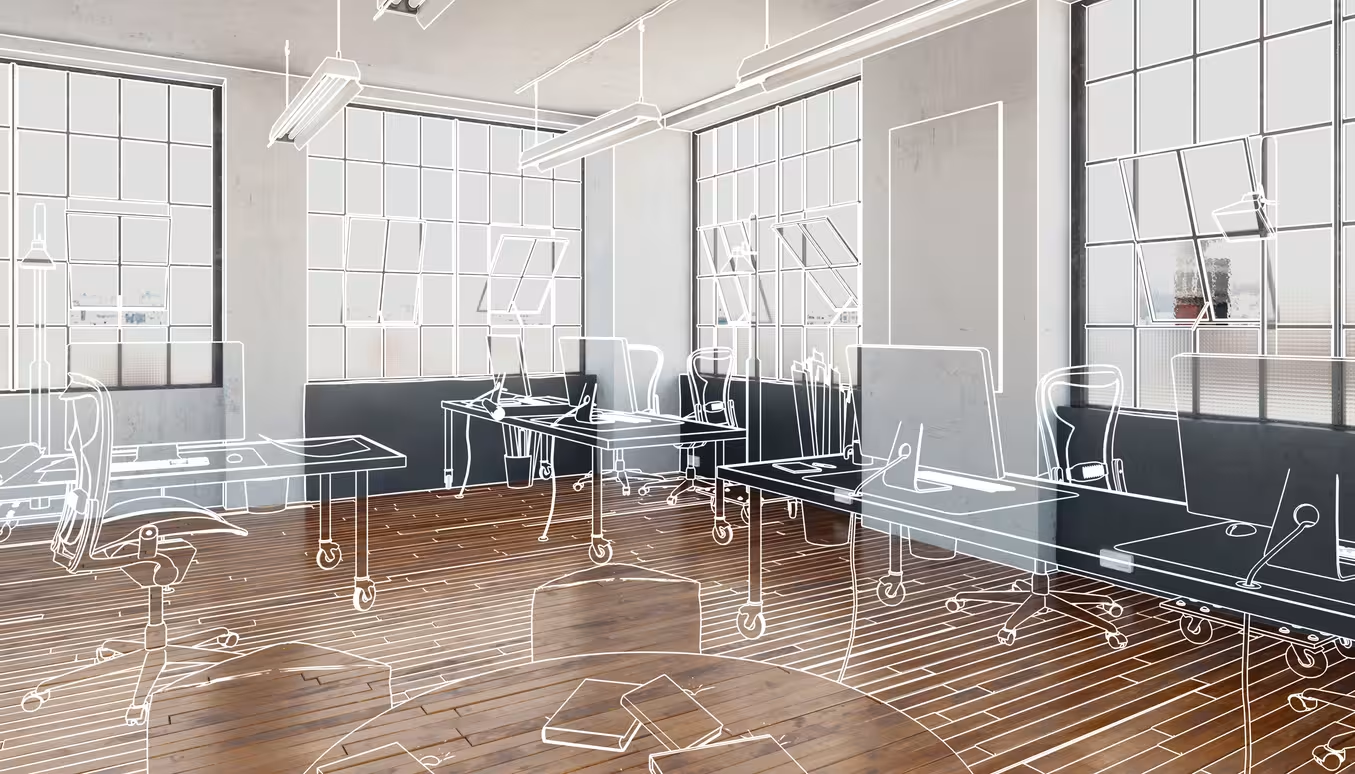
Instead of rigid layouts, offices became more flexible. Spaces could support collaboration, quiet work, and everything in between.
Much of what we now consider standard, from meeting areas to open collaboration zones, can be traced back to this way of thinking.
Ray Eames: Designing objects that fit the body
While Gilbreth focused on movement and Knoll on space, Ray Eames turned her attention to the objects people use every day.
Working alongside Charles Eames, she approached design with curiosity rather than assumption. Instead of asking what a chair should look like, they asked how people actually sit.
People shift. They adjust. They rarely stay in one position for long.
Traditional furniture didn’t account for that. It was often rigid, built around idealized posture rather than real behavior.
The Eames approach was different.
Through experimentation with materials like molded plywood and fiberglass, they created forms that could adapt to the body. Chairs became more responsive, offering support without restricting movement.
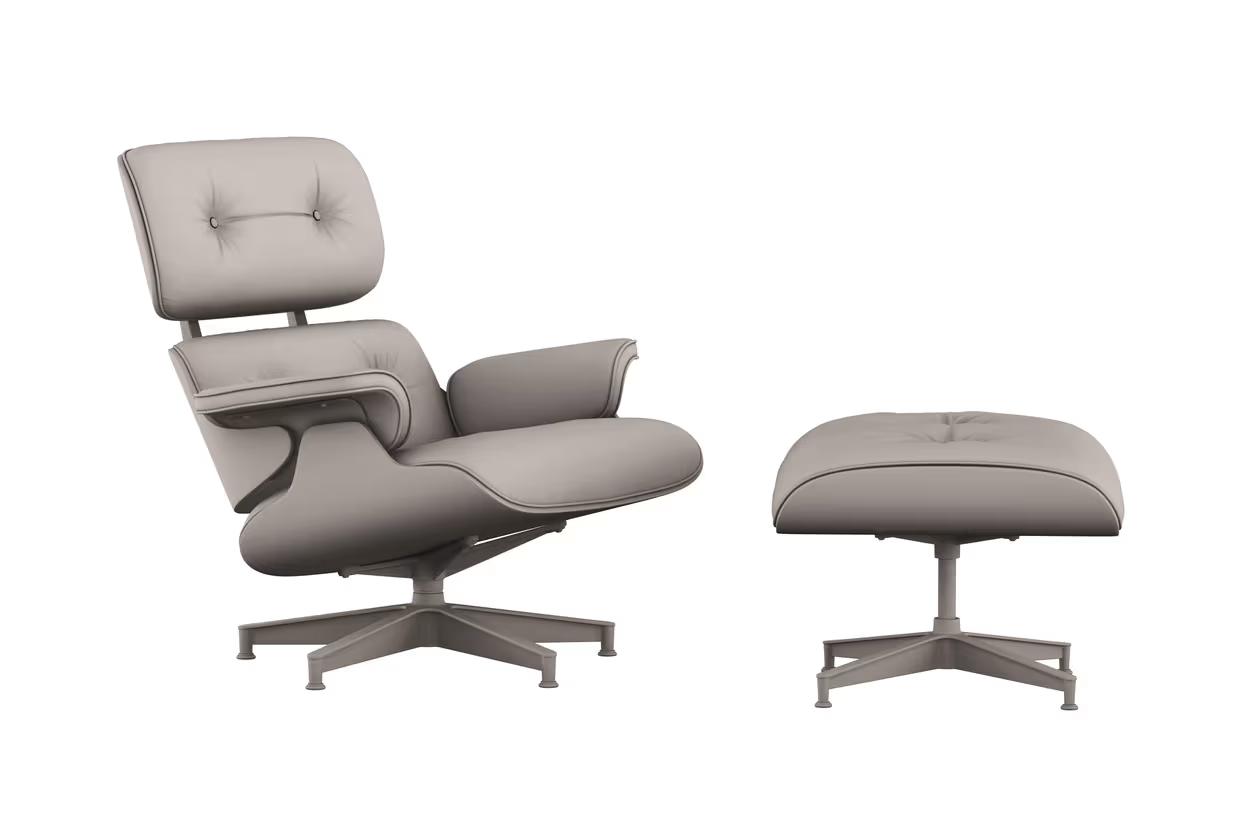
It was a subtle shift, but an important one.
Design was no longer about forcing people into a fixed position. It was about meeting them where they are.
A shared philosophy: Design begins with people
Although Gilbreth, Knoll, and Eames worked in different areas, their thinking overlaps in a meaningful way.
Each started with people.
Gilbreth looked at how the body moves. Knoll studied how people use space. Eames focused on how we interact with objects.
Together, their work helped establish the foundation of human-centered design.
It’s an approach that still shapes how workplaces are built today.
The challenge we still face: the gender data gap
Even with all the progress made in workplace design, one issue has persisted.
Many tools and environments have historically been designed using data based primarily on male bodies.
Researcher Caroline Criado Perez has brought attention to this as the gender data gap. When design is based on a narrow set of measurements, it often leaves out a significant portion of the workforce.
That gap shows up in ways that are easy to overlook.
Workstations that are slightly too large. Tools that require more force to use comfortably. Equipment that doesn’t quite fit the hand.
Individually, these differences may seem minor. Over time, they can have real consequences.
When design increases risk
This is where the impact becomes more serious.
Women experience higher rates of certain repetitive strain injuries, including carpal tunnel syndrome and upper-body musculoskeletal disorders.
Part of that comes down to fit.

When tools and workstations are designed around larger average body dimensions, many women have to compensate. That might mean reaching farther, gripping harder, or maintaining less natural posture.
Those adjustments don’t always feel significant in the moment.
But repeated day after day, they add up.
What starts as mild discomfort can turn into long-term strain.
Why inclusive design matters
Inclusive design addresses that gap.
It does not mean creating separate solutions for every individual. Instead, it means recognizing variation and designing with it in mind.
When products and environments support a wider range of people, the benefits extend beyond any one group.
Work becomes more comfortable. The risk of injury decreases. Productivity improves in a way that feels sustainable.
In many ways, this is a continuation of the thinking introduced by early workplace pioneers.
The question has simply expanded.
Not just how people work, but how different people work.
Carrying the legacy forward
At Contour Devices, that idea continues to guide how products are designed.
The goal is not to create tools that people must adjust to. It is to create tools that adapt to the people using them.
That means paying attention to how hands move throughout the day. It means considering different sizes, strengths, and working styles.
It also means recognizing that comfort and performance are closely connected.
When tools support natural movement, people can work longer, with less strain, and with greater focus.
The future of work is still human-centered
Work will continue to evolve. Technology will change. New ways of working will emerge.
What will not change is the importance of designing around people.
The pioneers who shaped the modern workplace understood that from the beginning. They asked better questions and challenged assumptions about how work should function.
Today, those same questions are still worth asking.
When design includes more people, it leads to better outcomes for everyone.
That is not just a principle. It is a practical way to build workplaces that support real, everyday work.
And it is how the next generation of work will continue to improve.
Which Device Is Right for You?
Take a quick quiz and get a personalized recommendation based on how you work.

